Business Hours

Sunday Closed
Monday 8:00 AM to 5:00 PM
Tuesday 8:00 AM to 5:00 PM
Wednesday 8:00 AM to 5:00 PM
Thursday 8:00 AM to 5:00 PM
Friday 8:00 AM to 5:00 PM
Saturday Closed

Uncategorized

Tayler’s Bike Set Up

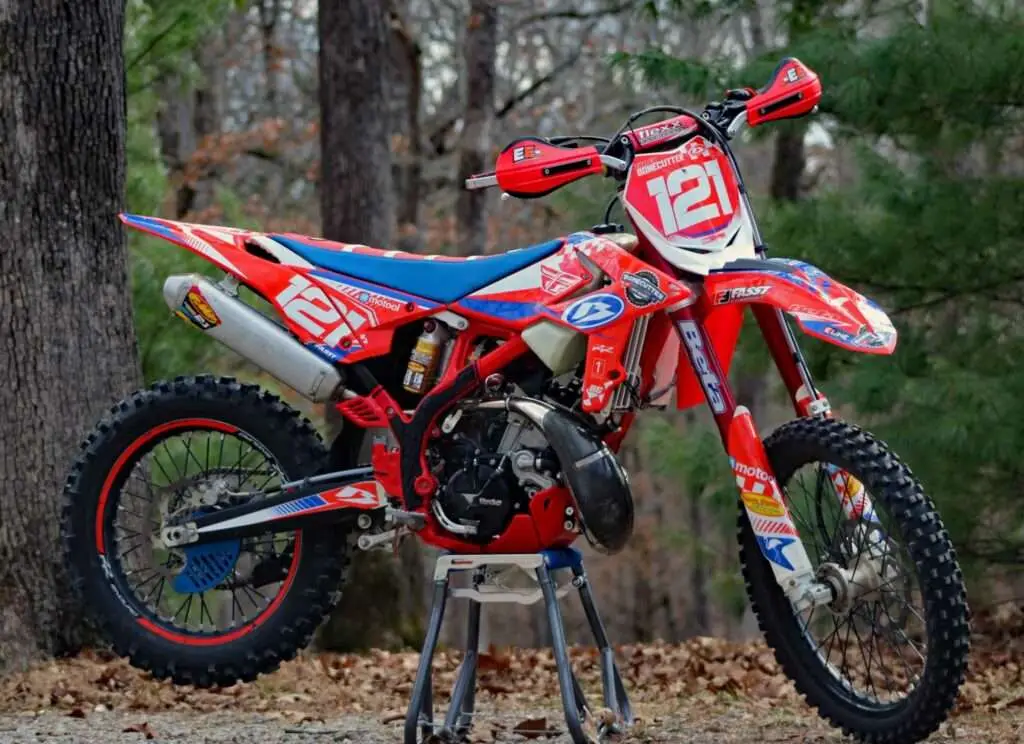
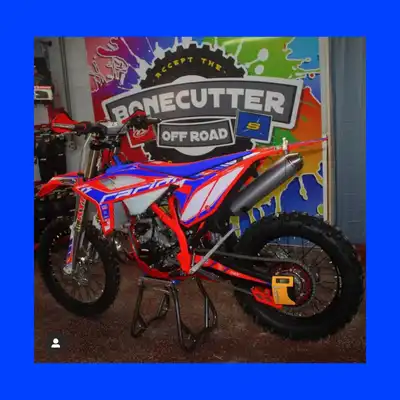
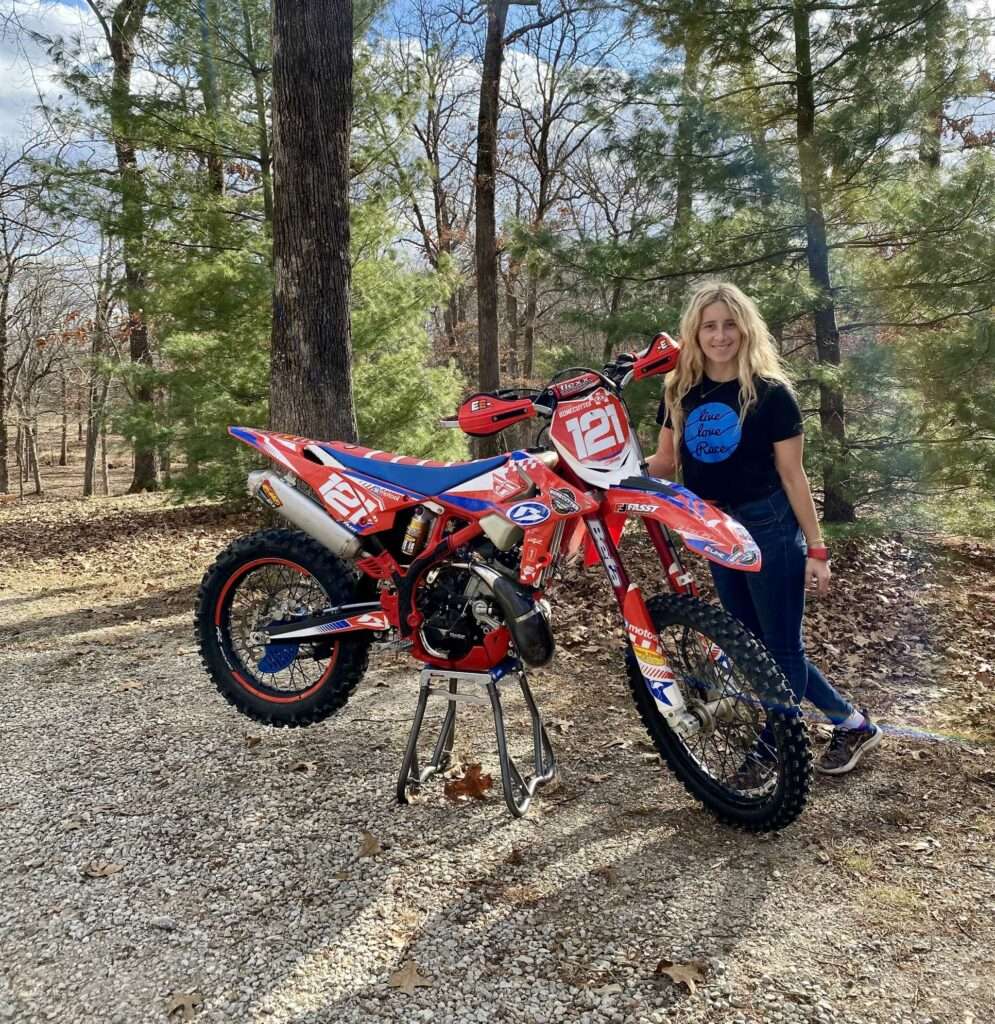
Tayler’s Bike Set Up Everyone is unique. I trust the brands that work and help me perform at my best. So, what does my bike set up look like? Let’s start with the handle bar area! I’ve been using Fasst Company Flexx Bars for three years now. They get rid of the rigid feel that standard bars have. With the added comfort, perfect bend for me, and help rid of some vibration, I refuse to go without. ARC levers are impossible to brake, help my small hands grab and feel the lever better, and the melmon version allows for extra flex in the lever. ODI Emig grips feel like a hard grip but ultimately do not make my hands/wrists hurt. I never get blisters. ODI Emig grips are also lock on which means NO MORE SPINNING GRIPS! For hand guards, I use Enduro Engineering full wraps. Next up, exhausts! I take the OEM exhaust off to save for when I resell the bike. I choose to put a FMF Fatty on paired with FMF Powercore 2.1. What about protection? As the years go on, I put the bare minimum needed for off road racing on. I upgrade the skid plate to Eline carbon fiber and an Obie linkage guard. I use Bullet Proof Designs radiator guards and rear disc guard. Some do not see the importance of a rear disc guard, but you are more likely to bend a rotor than you are to get a rock stuck in between it and the guard. I also upgrade from the OEM chain guide to a thicker one made by BRP. The case saver is upgraded to Enduro Engineering for better protection and easier cleaning. Plus, the handguards mentioned above. That’s it. I feel my most stable on the bike when using Fasst Company’s Impact Peg. The pegs are wider than OEM pegs and isolate the cleat from touching metal to metal making them absorb more vibration. The Impact Moto Peg also has the perfect tooth combo, I can remove my foot if I need to and not get “stuck”. I use the stock Beta seat foam; I actually prefer the firmness compared to a soft foam. I ditch the OEM cover and put a Seat Concepts 2.0 race ribbed seat cover on. Bike Graphix does all my graphic kits. They are the only company who I have found that has true Beta Red not Honda red! My current tire set up is Dunlop MX33 on the rear and a Bridgestone M59 on the front. I use Michelin Bib Mousses. They make the tires not bounce as much on the rocks and absorb some of the bigger impacts. Plus, that means no flats ever! I get my suspension set up for me to handle 90% of the terrain I ride. I get the proper springs for my weight and have the valving tweaked to meet my needs. I am 5’2 and do currently lower my bikes 1 inch. I keep the gearing stock. I adjust the powervalve to flush with the case and majority of the time, keep the stock jetting. I upgrade the stock cooling hoses to Samco or Boano to keep the bike cooler and eliminate the thermostat. The bike is designed a certain way so to make all this wild mods are not necessary for most rider’s. All of that gives me the best-looking bike, the best riding bike, and the most fun bike!   More Posts Back To Blog Page

Tayler’s Bike Set Up Read More »
Strong Core = Better Rider

Strong Core = Better Rider Y’all have heard me stress over and over the importance of having strong legs. Another overlooked area would be your core. It’s not just the abdominal muscles but every muscle excluding the legs and arms. Your core supports your body. It helps resist outside forces. Think about all the different forces we face on a dirt bike; it could be sandy whoops, rocks, boulders, logs, roots, etc.. All of these apply force to your body in different ways. The stronger the core muscles, the better control you will have on the bike. As a rider, you have to move the bike to correct it not just by moving the bars. You will also have to be able to resist rotation. A strong core will also help you be able to stand up while riding longer and be more efficient. Basically, where I am getting at, the stronger the core, the better, faster, and safer rider you will be. Did you know, if you suffer from lower back pain, it could be three things? Underactive glutes Weak core Tight muscles What exercises should you be doing? As mentioned above, it’s not only about abs. Compound movements such as deadlifts, squats, lunges performed correctly and engaging the correct muscles will target the core muscles. Be sure to include those into your riding fitness routine. Dead bugs! They strengthen and stabilize your core, spine, and back muscles. This improves your posture and helps relieve and prevent low back pain. You’ll also improve balance and coordination. Bird dogs! They help improves stability, encourages a neutral spine, and relieves low back pain. It strengthens your core, hips, and back muscles. It also promotes proper posture and increases range of motion. Planks Side planks Commandoes Russian twist (if able to, use a weight) Sit ups (if able to, use a weight) Lying leg raises with ball Hanging leg raises Froggers Wall Slams V-Ups Hollow Rock Hold Remember, just like any exercise, keep good form and push yourself. Don’t fall into the habit of this is hard but gets easy and not doing anything to make it harder again. To gain muscle, you have to push yourself! If you need help developing a dirt bike rider/racer program, let me know! More Posts Back To Blog Page

Strong Core = Better Rider Read More »

Talent makes you good, grit makes you great

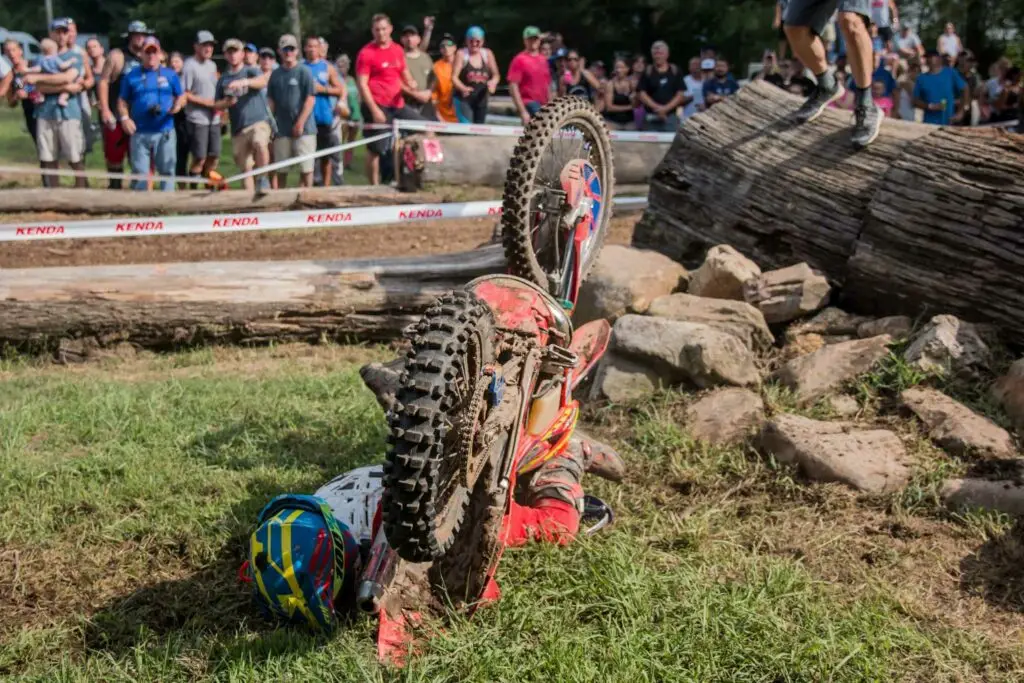
Talent makes you good, grit makes you great When I was in Tech School, I had an English writing assignment to choose a noun and write about this noun. I thought about it and chose grit. I knew I could easily write on this subject and tie dirt bikes into it. Every paper I wrote that year was about dirt bikes and my teacher loved it. *“ Grit – firmness of mind or spirit : unyielding courage in the face of hardship or danger” By Marriam Webster Dictionary* Grit is the willingness to peruse one’s goal’s no matter how long it takes. To keep going when it gets hard. To keep chasing it when things go backwards. To fall down and get back up. To have passion for long term achievements. To keep moving forward. Grit is not needing instant gratification. Grit is to keep working when no one is cheering or watching. Grit is becoming stronger when you get knocked down. Grit is knowing when bad things happen, it is an opportunity to get better and not letting it happen. Grit is learning from an injury and comeback stronger than before. Grit is when you want to quit, you don’t. When you’ve wrecked a billon times and zapped all of your energy, you dig deep and find more to keep going. Grit is flipping upside down on a log and getting back up and doing it again. And again, until it’s easy. Grit is to keep going when every ride or race is hard, knowing at some point, it will get easier. Grit is riding or racing when its +90 degrees or 30 degrees. Grit is showing up to the race when conditions are shitty and race anyway. Grit is facing your fears. Grit is a combination of determination and passion and what it take’s to reach your goals. Talent makes you good, grit makes you great. More Posts Back To Blog Page

Talent makes you good, grit makes you great Read More »

Routine Check Up on Your Dirt Bike

Routine Check Up on Your Dirt Bike The number one way to keep a bike in good condition, is to clean it, check it, and perform maintenance. Just like how to keep yourself in good condition. Here is a list of our top things to check after a ride or race: Oil – Is it dirty? Is it low? Keeping fresh oil in a bike will make the engine components last a lot longer. Dirty oil makes everything else in the engine dirty. Air Filter – Does it need to be cleaned and serviced? Keeping a clean filter helps it not get clogged or dirt to accidently escape into the air boot. Brakes – Do you have brake pads left? Another tip, if you are hard on brakes, get into the habit of bleeding your brakes + good high temp fluid after every race. Bearings – Are your wheel bearings, linkage bearings, and swingarm bearings all in good shape? Tires – Is it time to replace or get another ride? If you run tubes, check PSI and make sure the valve stem is not rusty. Bolts – Are you missing bolts? Make sure everything is tight. Spokes – Make sure none or are broken. DO NOT overtighten, that will cause them to break more easily. Cables – Check over the condition of all cables. Chain, Master Link, and Sprockets – Most chain issues can be prevented. Make sure the master link is in good condition. The sprockets will start curling when it is time to replace. Coolant – Make sure it is full Bottom line, these are all small check overs that will help your bike last longer and allow you to ride it more often with less issues. Get into this habit and log everything you do. It’s worth it in the end. A mechanical DNF stinks and missing out on epic adventures does too! More Posts Back To Blog Page

Routine Check Up on Your Dirt Bike Read More »

What should you do if your dirt bike sits for months?

What should you do if your dirt bike sits for months? I’m sure this happens pretty often especially if life or injuries get in the way. Just like you, your bike gets lonely and will need some love! Letting a bike sit can be more expensive than riding it. So, what should you do before firing it back up? First off, dig it out! Check the seals! This includes for seals and engine seals. Fork seals can randomly start leaking. Who know?!? Maybe you put some engine work off because you knew it would be months before you could ride again. Check and change the oil, filters, and coolant. It is always a good idea to freshen a bike up before any kind of ride. Sometimes mice can find a home in your air box and chew up your air filter. It is best to check it for any holes! Check the coolant and make sure it does not need topped off. Fresh oil and oil filter is highly recommended. Bleed your brakes and make sure they are in working order. If you left gas in your bike, plan on getting rid of it and cleaning your carburetor unless you are using VP racing fuels. Pump gas goes bad quickly and can gum up, absorb water, and is no longer useable. Even high-quality pump gas can do this. If you know ahead of time your bike will be sitting, go ahead and put VP in it. It will save you a ton of time and money later. Next up, get to greasing! Grease the bearings and the chain. Check all nuts and bolts. This is something you should do after any ride anway. If you run tubes, check the air pressure. Make sure all controls are in working order. Look over the brakes, clutch, and the throttle. Ensure, all lines are in tact and not too tight. Charge up the battery and make sure it is still in working condition. Lastly, check the spark plug. It could have drawn in moisture. Now it is time to fire it up! If all goes well, the next step is to go out and RIDE! More Posts Back To Blog Page

What should you do if your dirt bike sits for months? Read More »

Why strength training your legs is important for a dirt bike rider/racer

Why strength training your legs is important for a dirt bike rider/racer If you have ridden a dirt bike, you understand that it is very physical demanding. It is not simply a motorized two-wheel machine that is a breeze to ride. It requires an individual to be able to control it. To be able to control it well, a person needs to be physically fit, strong, and have endurance. The fitter you are, the faster you can go. It’s no fluke that after I started cross training along with 5-10 hours of seat time a week, that my skill level significantly increased. I started as a trail rider surviving the course to a competitive racer, moving up through the ranks, landing in A class. To me, overall strength is crucial but having a solid lower body is the most important. It absorbs force and delivers force back while maintaining position on it. The bike is controlled with your legs. The stronger the legs are, the more control. Take a minute to think about how many times in a lap, you sit and stand up. If not conditioned correctly, that is very tiring ultimately resulting in bad form, more wrecks, and slowing down. Let that sink in.. Bad form and more wrecks could potentially result in more injuries. Joints not supported with good muscle strength, results in a higher risk of injury. Slowing down means you get beat. Our sport is risky but a lot of injuries can be prevented by having and maintaining proper form on the bike and having muscles supporting your joints. One thing to help you as a rider, is to start training legs. If you are a beginner, start with body weight or light weight dumbbells and make sure form is correct. As you progress, don’t be afraid of the barbell and adding weight. The load your bike puts you through is large, so push the weight and go through full range of motion! Do not ignore muscles imbalances or things that seem very hard for you. If you keep working at it and working on the problem, it will get better. If you ignore it, your progress will be hindered. My top pick leg workouts: Barbell Back Squat ROM Barbell Dead Lift Bulgarian Split Squat Single Leg Dumbbell Dead Lift Raised Front Foot Forward Lunge Reverse Lunge Barbell Hip Thrust Single Leg Calf Raises Stability Ball Hamstring Curl If you do not know where to start, I am happy to help! Not only do I sell dirt bikes and parts, I offer personal training to help fellow dirt bikers meet their health, fitness, and riding goals! More Posts Back To Blog Page

Why strength training your legs is important for a dirt bike rider/racer Read More »

Summer heat coming in HOT

Summer heat coming in HOT Well, guy’s looks like the summer heat is coming in HOT! Upper 90’s temperatures usually do not hit Missouri this early. But here we are, heading into a race weekend with heat index into the 100’s. Are you ready?!? Here are some tips to survive the baking sun. HYDRATE! Lay off the beer and soda the week before a race. Try to consume lots of water throughout the day even if you are not outside in the heat. Nonactive individuals are recommended to have a minimum of 64 oz of water a day. If you are active, like a dirt bike race, you need a gallon… that’s right a gallon. Being the slightest bit of dehydrated can hinder you on a race day. Hydrating for a race starts before the weekend. On race/riding weekend drink plenty of water before starting. Camelback is not a bad idea either. It is important to have a “sports drink” that has electrolytes along with some complex carbohydrates in it to replenish nutrients loss over excessive riding in the heat. Avoid all sugary drinks. I used 1st Phorm Intra-Formance. I drink it before the race and at enduros I drink it between tests. Some people even put it in their hydration pack. NUTRITION! This all depends on the type of person you are and what your body handles. It is important to remember FOOD IS FUEL. It literally gives you the fuel to function, if you do not eat, you do not function correctly. In the heat, I work better with smaller meals and snacks. Fruit is a must! Of course, there’s more but I won’t bore you with what my diet/nutrition plan looks like. LIGHT GEAR! Lots of companies release summer gear that is a lot more vented. I like to use Fly Kinetic Mesh when it is steamy out. My dad also uses EVS Cooling Vest. They work like a charm! STAY COOL! I used to think being outside in the elements during race day make the heat not as bad but that is WRONG. It is proven fact that staying cooler allows your body to function longer in the heat, same with being able to push longer. If possible, stay in A/C until you have to go up to the line. Don’t have A/C available? Other options are sitting in front of a fan, eating frozen foods (like fruit or smoothies), ice, and ice cold water. If it is not a race and just a riding adventure, start the days EARLY, get up with the sun! I promise, it is a lot cooler outside before 9 AM. Plus, the views are worth it! Along with the feeling of accomplishment before most people are awake. WATCH YOURSELF AND OTHERS! Pay attention to how you feel. If you are experiencing symptoms of dehydration and other heat related issues, get help, go to a cool place. Lookout for the people around you, they may not know what is going on. REPLINISH! & REPLINISH SOME MORE! I cannot stress this enough. I like to be ready to get back to normal training practices as soon as possible! The muscles in your body cannot heal without replenishing what was lost in sweat and activity. After racing or a hard ride, I follow up with a protein shake and carbohydrates. So, it is protein powder, 1st Phrom Phormula 1, water, 1st Phorm Ignition, and ICE. This helps the body know it is time to start healing the muscles. It will also speed up recovery and help with soreness. You can be the fittest person out there or work in the heat all the time but that does not eliminate the heat related risks. STAY HYRDATED & HAVE FUN! More Posts Back To Blog Page

Summer heat coming in HOT Read More »

Tuesday Bike Fitness Tip

Tuesday Bike Fitness Tip First off, I hope y’all are finding the new website easy to navigate and are enjoying some of our new features, like a search bar and the option to shop by bike fitment. Secondly, I have not been riding due to an injury but that is not an excuse to not be productive with what I can do. I have been using the time that I usually dedicate to riding and racing to learn more about training, lifting, muscles, etc… Since, I am still able to train legs, I have been addressing the weaknesses that I have ignored in the past. I hit 275lbs on the leg press today. 6 weeks ago, I was at 120lbs. It’s amazing what you can do when you pay attention to your weaknesses and learn how to fix them. My hamstrings have always been super weak and I hated training them for that reason so I didn’t. I also had “super tight” hip flexors. That can also be associated with weak glutes. I also knew I hadn’t been using my legs as much as I could on a dirt bike. But why is that important? Legs and core control the bike not your arms. I was not being as efficient as I could be. I knew that but didn’t want to admit it. If you feel like the bike is riding you, I would first address, proper form. Proper form is on the toes, hinging at the hips, and controlling the bike with your legs providing a lighter grip on the bars. Study your form and study other riders with this form like Ryan Hughes, Ken Roczen, Cooper Web… Locate that small detail you might be missing, work on it. When riding every day is not an option, build core and leg strength. Having core and leg strength is not just important for form but it can also help prevent injuries. Some injuries can be avoided with having muscle built up. Less injuries = doing more of the things you love. Another added benefit, putting full effort into form and strength training might make you ride faster, be more efficient, ride safer, and enjoy riding more! If you do not know where to start, reach out, I am happy to help! More Posts Back To Blog Page

Tuesday Bike Fitness Tip Read More »

Competition

Competition I love to compete. A competition with myself. Did I leave it all out there? Did I push beyond my mental and physical limits? You can always do more than you think. To BE better, you have to DO better! What another person can do, you can do. But you must DO THE WORK! Have grit. More Posts Back To Blog Page

Competition Read More »

Why Sag is a Priority for Bike Setup

Why Sag is a Priority for Bike Setup WARNING, I am not a suspension expert but understanding how it works is something that interests me. Having the bike properly set up helps the overall rideability of it. I’m not saying you have to go spend thousands of dollars to get your suspension tuned but suggesting to at least have your sag set correctly. Doing so ensures the correct size springs are in your bike along with allowing for better overall handling. But why is this a concern for you? Safety – having springs too soft can literally throw you on your ass. Makes the ride more enjoyable! Performance – having a bike properly set up might make you faster! The sag can be decreased to make quicker handling but will reduce high speed stability, this is good for tight courses because it can help improve steering accuracy. It is also recommended to do so in muddy conditions to handle weight build up. Increasing the sag, improves stability in high speed and sandy tracks. A spring too soft will ride high in the rear because it needs preloaded more than a stiffer spring. A stiffer spring will have a lower initial ride height but will feel firmer on bumps. Static sag is a measurement of the bikes distance that the rear end of the bike settles while on the ground, but only under the load of its own weight (no rider) and is checked before and after rider’s sag. For 125cc and above, the number should be 35mm +/- 5mm. Rider’s sag is the distance that the rear end of the bike settles when on the ground and under the load of the rider’s weight in full gear. This number should be 105 mm +/- 10mm. Linkage bikes should be 95mm – 105mm range and KTM PDS should be 105 mm – 115mm. If the measurements are above range values you need a softer spring. If it is below, then you need a stiffer spring. How do you measure the sag? Invest in a Motool Slacker! Eliminates having to do math, is very accurate, and is only $159.99! We keep this must have tool in stock. It is the most convenient and easiest way to measure sag. Center the tool in the middle of the axel and always place the clamp in the exact same place every time. Put the bike up on a stand with both wheels off the ground and measure the static sag. Then, have the rider hop on in full gear and in “attack position”, standing not sitting in a granny position. Bounce up and down a few times and check the number. Just like anything, there is different ways to do everything. I have heard some people like to stand up and then sit down naturally to measure the rider’s sag. Other people check both standing and sitting and do an average of the two. Have the rider get off and check the static sag measurement. Don’t understand it? ASK! More Posts Back To Blog Page

Why Sag is a Priority for Bike Setup Read More »

Scroll to Top