Business Hours

Sunday Closed
Monday 8:00 AM to 5:00 PM
Tuesday 8:00 AM to 5:00 PM
Wednesday 8:00 AM to 5:00 PM
Thursday 8:00 AM to 5:00 PM
Friday 8:00 AM to 5:00 PM
Saturday Closed

Author name: Brenna Baker

Gearing up for Race Season: Part 1

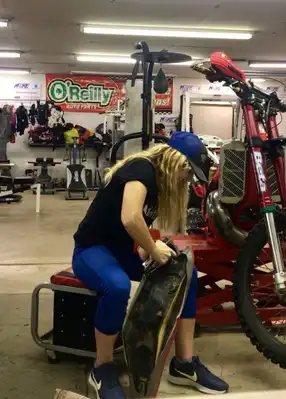
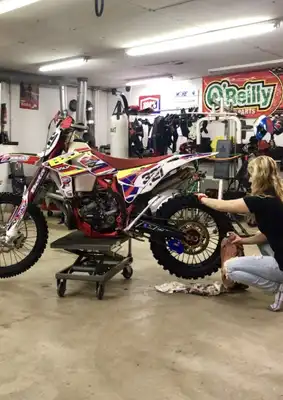
Gearing up for Race Season: Part 1 Under two weeks left until the first race of the year and it might be time to start inspecting the race bike. Either you have rode the bike all winter or you parked it after the last race. Sometimes things needing attention can be forgotten and that is exactly why the dirt bike should be looked over a few weeks prior to the first race. It ensures you have time to go to your local dirt bike shop for parts and maybe even get them installed. For me, I spent most of the winter on my 2018 Beta 250. It currently has around 40 hours on it. Not a lot of maintenance is needed at this time. After my last ride on it, I gave it a really good bath. Removed all the plastics and the tank and went to town scrubbing on it. It took FOREVER but totally worth it. While I do this, I look over the bike and make mental notes of what is needed. Generally, after a full season of racing and practicing my bikes are in desperate need of fresh plastics. So, before the first round I like to get new plastics and new graphics. Not a necessary item but what else am I going to spend money on? I shoot to have the plastics and graphics done at this time so I do not have to put the old plastics back on during the first race prep. Inspect the handguards. Are they loose? Are they so bent new ones are needed? 9 times out of 10 this is the case for me, so I plan on replacing them at this time. What about the grips? Is it time to replace them? INSPECT EVERYTHING! I tend to have a problem with bending headers. I guess they are kind of a disposable type item. I make sure that it isn’t so bent that it will be a problem. Like making sure it is not rubbing on hoses. Luckily, my FMF Fatty is in good shape! After the appearance check over is finished, I start reading my dirt bike diary to get a refresher on what has been done and what has not. Oil change for sure. Did the oil smell burnt? Wouldn’t hurt to check the clutch to make sure everything is in working order. Brakes and clutch need to be bled. Look at the brake pads, if they are border line replace go ahead and replace them. Install a new sparkplug. Clean the air filter or buy a new one. Check the coolant levels. Do the fork seals need replaced? What about the fork fluid, is it time to change that? How are the chain and sprockets? Again, if it is borderline, I lean more towards replacing. What is the point of starting the season with junk parts? Are all the bearings in good shape? Would not hurt to go ahead and disassemble the linkage and swingarm bearings and add more grease to them. Don’t forget the tires! If bibs are ran are they still good? If not, check the tire pressure and make sure the tubes still hold air. Another thing to consider, is it time for a rebuild? If it is near time, go ahead and get that out of the way now. As I stated above, my bike has 40 hours on it, so I do have some life left on the top end. After all parts are replaced that are needed, start assembling! In an ideal situation this is at least a few days prior to the race. When finished, stare at the beauty and take pictures. Ride it around some. Get your competition face on because it is race season!! More Posts Back To Blog Page

Gearing up for Race Season: Part 1 Read More »
Wrench Tip Wednesday: Repacking Silencers

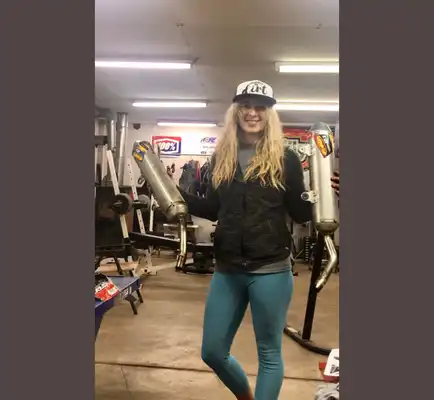
Wrench Tip Wednesday: Repacking Silencers   Ever have someone ride by and their bike is super loud, like so loud you cover your ears? Chances are their silencer needs to be repacked. The exhaust packing from the bike’s engine exits the pipe in waves and travels through the silencer. Packing around the core lets the silencer control the waves as they leave the bike and also keeps sound levels down. It is obviously when a person’s silencer packing is no longer good. Unburned mixed gas leaving the cylinder or excessive heat wears on the packing. There are many benefits to repacking your silencer. You don’t loose your hearing (Reducing sound levels) Can improve the throttle response Can restore peak power (who doesn’t like power?)   First off, remove the silencer from the bike. If it has a spark arrestor remove it before proceeding. Remove the allen screws or rivets from the front of the silencer – do not remove the rear end cap. Hold the front end cap and begin working it out of the cannister. A rubber mallet might be needed to lightly tap the mount to get the front end cap to break loose. Slowly pull the core all the way out, exposing all the remains. Unwrap the old packing from the core and discard. Clean the core with a wire brush to ensure no clogs and remove all old material. Align new packing with the longest dimension to be the length the core. Wrap the core. Secure the packing with ½” masking tape near each end. The packing should be snug but not too tight. Apply a thin bead of high temp silicone to the front end cap where contact is made with the canister. Reassemble the silencer and wipe off any excess silicone. Now your bike might have more horsepower and your ears live to hear another day! More Posts Back To Blog Page

Wrench Tip Wednesday: Repacking Silencers Read More »

Wrench Tip Wednesday: Grips

Wrench Tip Wednesday: Grips Grips are a wear item that should be replaced as needed. If you are gripping the bike more with your legs and less with your hands, the handlebar grips should last for what seems like forever! First off, choose what type of grip you want. I use to have a problem with twisting grips. They could be glued and wired on and it I would still twist them! A few years ago, I finally decided to try lock on grips, I no longer twist grips. I use ODI EMIG lock on, they are a little harder than most grips but don’t death grip them and its not a problem. These grips also come with a new throttle tube every time they are replaced. My dad likes the Risk Racing grips, they are a little bigger than the averaged size grip. My brother prefers the Renthal Kevlar grip, they are overall a softer, tackier type grip. If you go with grips that do not lock on, make sure you have grip glue and wire. It also helps to have safety wire pliers. Sometimes, the old grips come right off with ease once the wire is cut off. If it doesn’t, get a knife or a razor blade and start cutting the old ones off. Once the grips are off, clean the bar and throttle tube thoroughly with contact cleaner. It is also, a good time to inspect the throttle tube for excessive wear. If it is cracked or chipped go ahead and replace it. Get your fast hands and glue ready. Apply a small bead of glue on the inside of the grip and on the edge of the handlebars. Try to make putting the grip on in a smooth motion. Make sure the grips are in the desired position, if not you have to live with the way it is. Do not get any glue under the throttle tube. Some people prefer to not use grip glue and use spray paint. We have tried that and it seems to work about the same as the glue (still need wire). Pretty much just spray the paint on the bar and slide the grip on. Let the glue dry completely. Install the safety wire. I recommend at least two wraps of safety wire around the grip. I use to do three, inside, middle, and outside. Safety wire pliers make this job way easier. After twisting the wire together, cut it about a quarter of an inch away from the grip. Bend the cut end down and put it under the wrap of wire. Make sure it won’t catch on your hand when riding. Lock on grips make life EASY!! Remove the old grips by loosening the screw. New ones go on the same way except tighten. Because it comes with a new throttle tube, make sure you choose the correct cam for your bike. I just match the new ones up with what I had on already. This would also be a good time to spray Cable Life on the throttle cable. More Posts Back To Blog Page

Wrench Tip Wednesday: Grips Read More »

Wrench Tip Wednesday: Installing Seat Covers

Wrench Tip Wednesday: Installing Seat Covers Did you know that getting rid of the stock seat cover with something rad automatically makes you faster? Haha kidding but it sure does make your bike look cool! I absolutely hate installing seat covers, no patience for that. First off, the old seat cover needs to be removed. Sometimes, getting the staples out can be a chore. I discovered the combo of a flathead screwdriver and needle nose pliers will do the trick. Once all stables are removed and old cover is off, turn the seat right-side up. Start at the front of the seat by pulling the cover over the end followed by doing the same at the back of the seat. The cover should feel tight to pull over both ends. Insuring it will help give a wrinkle-free finish. Once both ends are on the seat, check any logos on the seat are straight and centered. Be sure to also check the seams of the stitching, it should be sitting square. Grab the staple gun. Make sure it has the longer staples in it. Punch one staple to the front and the rear of the seat. Make sure you press the staple gun firmly down onto the plastic evenly or the staple will fire through the cover and cut a hole straight through it. Also, lack of pressure on the gun might keep the staple from penetrating into the plastic. If this happens pull the staple out and try again. Work your way from the front to the back of the seat pulling the cover tight and adding a staple to each side of the seat all the way down to the back. Keep checking that the cover is going on straight and snug to the seat base. I have a hard time trying to hold the seat, keep the cover tight, and stapling it all at once. If this seems to be your problem, I have found using two people does make it a lot easier. I also do not have a high-powered staple gun, just a standard one. More Posts Back To Blog Page

Wrench Tip Wednesday: Installing Seat Covers Read More »

Wrench Tip Wednesday: Chains

Wrench Tip Wednesday: Chains Chain and sprockets are easy to forget about but need to be near the top of the list for maintenance checks, like before every ride. Having a chain too loose, too tight, or wore out could be bad. When the chain is too loose it can wear out the chain slide prematurely or derail. A derailed chain can be super annoying and will delay the ride. A chain that is too tight can snap. When a chain breaks, it can damage the bike or even hit the rider in the back. Bet that will hurt. Majority of the time, this can all be prevented. Do a visual check, most people can tell just by looking at the chain if its too loose or too tight. A good rule of thumb is the three-finger method. Put three fingers on top of each other. You should get three fingers in between the chain and swingarm. If not, it’s obviously too tight or if there is still a lot of slack with your fingers in there, its too loose. So, adjust it. Loosen the rear axle. Tighten the chain tensioner bolt to loosen chain. Loosen the chain tensioner bolt to tighten the chain. Make sure the chain blocks are aligned properly. It ensures the truest reading when checking the chain. Before you tighten your axle, it’s a good idea to take a shop rag, fold it up and place it on the rear sprocket, all while spinning the wheel backwards. The rag will jam in the sprocket and chain causing the wheel to stop, tightening your chain, and butting the chain blocks up against the adjuster bolts. A bottle will also work. Tighten the rear axle up. Check the chain again. Inspect the condition of the chain and sprockets. It would be embarrassing to DNF over a master link falling off, chain breaking in half from it being so wore, or derailing because the sprockets are missing multiple teeth. When washing the bike, a focus point should be getting all the dirt and grit out of the chain. Spin the wheel around so you can hit every part of the chain. Then lube it. I prefer lube that doesn’t splatter everywhere when riding, I like the tacky stuff. If it splatters, that is more cleaning. My favorite chain lube is Bel Ray Blue Tac, it is super sticky. My dad likes to use Silkolene Pro chain. As always, it comes down to personal preference. So, if this is not on your list, add it, check it, lube it. More Posts Back To Blog Page

Wrench Tip Wednesday: Chains Read More »

Wrench Tip Wednesday: Muddy Gear

Wrench Tip Wednesday: Muddy Gear Winter and spring months can be soupy. The sloppy mud conditions can either be embraced with a smile or sitting at home sad. I choose a smile! So, what does a person do when their gear is no longer vibrant colors but instead is a nasty brown? Here are the options: Throw the gear away and buy a new set – this can get costly pretty quick and is wasteful. Show up to next race with gear already muddy. Psyche everyone else out about the conditions of the track. I strongly DO NOT recommend throwing the gear in the washer machine right away, unless you want to make your mom or wife/significant other mad. It will also not get all of the mud out and the gear will be stained. So, it will be a lose, lose. The best way to get the filthy gear clean. Lay all the gear out and power wash. Try to get all the mud out. Keep spraying until the water is no longer brown. Do not get so close that it ruins the gear. Once clean, put it in the washer machine and wash like normal. Its hard to avoid mud this time of year and increases power washing time by a lot! Playing in the mud is way better than sitting on the couch dreaming of your bike. If you forgot how to wash a dirty bike, refer to my blog post “Dirty bike = NO GOOD”. More Posts Back To Blog Page

Wrench Tip Wednesday: Muddy Gear Read More »

Wrench Tip Wednesday: Throttle Sticking

Wrench Tip Wednesday: Throttle Sticking One of the scariest “oh sh!t” moments to happen on the bike is the throttle to stick wide open. It is extremely easy to panic in that kind of situation but let’s talk about why it could happen. The throttle cable could be damaged or frayed. So, this needs to be on your list of items to inspect every time maintenance is done. Double check how the cable is routed and what it is next to. Sometimes the cable can get pinched between other things on a bike and it can be caused by a simple wreck. Debris can be caught between the throttle tube and the handlebar. Check the throttle housing for debris. If the cable is applicable, lube it. The throttle slide could be stuck in the carb. The bike could have an air leak: Broken or cracked reeds Loose hose clamps Damaged hoses Loose spark plug Carb insulator Bad gaskets Bad crank seal Crack or damaged head. Some of the things that can go wrong are not preventative but if a person thoroughly inspects their bike often and makes detailed notes in their “diary” a throttle stuck wide open can be prevented majority of the time. Sometimes, sh!t happens…. You might have inspected the cable and everything looks good but you get to experience one of those scary moments. Some riders are so in tuned to how their bike is running and acting and can tell the throttle is sticking before its too late. If you are one of these lucky riders, stop and figure out why it is sticking, fix it. What do you do if you are not so lucky? Stay calm and try not to panic. Riders who do not run a Rekluse, needs to pull in the clutch, apply the brakes and hit the kill button. Get the bike to shut down. If you have a Rekluse, lock up the brakes and try to push the kill button or choke it. If you are not capable of doing either of those, jump off the bike. Do not have yourself on the bike straight towards the tree, cliff, or whatever obstacle it might be. I know, easier said than done but be aware a throttle stuck wide open can happen to anyone. Point is, do not forget to check your cables. Keep dirt out of the carb. Be observant. After every race or ride, inspect the ENTIRE bike. Most manufactures offer a maintenance schedule, it is a good idea to follow their suggestions. Enjoy the ride without a panic attack. More Posts Back To Blog Page

Wrench Tip Wednesday: Throttle Sticking Read More »

Tayler’s Travels of 2018

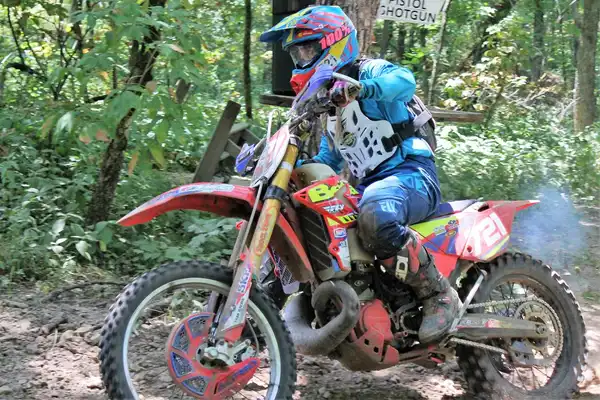
Tayler’s Travels of 2018 The 2018 race season was spent putting lots of miles on the road along with hours on the dirt bikes. It has been absolutely crazy but I have traveled to lots of neat places, riding/racing in 14 different states. My Dad and I chased all of the National Enduro Series (NEPG). I finished for the year 3rd in Women’s Elite and my dad finished 2nd in A+50. It was a rough start to the season but I am finally getting the hang of the enduro format. My favorite round was Dragons Back in Arrington, VA. After early morning rain, the dirt was phenomenal. So good, it was like a dream. My second favorite race was Loose Moose in Michigan. We had a scenic drive along the Great Lakes. The trail was really cool too, it went from sand whoops straight to humongous moon rocks, EPIC. Pretty much, I have learned there is a lot more than just Missouri hills and rocks. We are chasing the entire series again in 2019, I am pumped!! I raced the B class in the MORE series. It was a learning year for me, B class is a lot more aggressive than C class. As in, they are not scared to put a fender in ya. I finished 9th in Sportsman Intermediate, 5th in B Long, and 1st in Ladies A. My all-time favorite round was in Versailles. The trail was flowy and fast!! Meg and I made a trip to Colorado and got to see what all the hype is about! We attended a Megs Braaap class along with a VIP ride. The views were killer!! The trails were sick!! The people we met were amazing!! We rode around 500 miles of trail and there is so much more to see, but too little time this trip. I attempted a hard enduro, Tennessee Knockout (TKO). It rained the entire night before and made conditions slippery. The women start on the last row, so we had to deal with massive pile ups. None of the girls finished a lap in the time limit. They let all of us race the “women’s final” which was mostly an endurocross track. It was by far the toughest race I have ever done. I misjudged a log and endowed, very tough to get back up after that one but I did. I was glad to come home with only bruises and a bike NOT destroyed. Meg and I duoed The Off Road Cup, 9 hour 3 wo”man” team race and finished 2nd out of 6 lady teams. It had rained a lot the week before so conditions were muddy but held up extremely well considering. 9 hours is a long and tiring race with only two people. It was tough going out for the last lap but Frank Leivan yelled at me “You don’t quit girl!!”. I did 7 out of the 13 laps and I was extremely sore. Earlier on in the year, I had an urge to race a 24-hour race! Meg and I got an all-girl team together, Fast & Feisty and raced the Gut Buster in Texas. Now, that was a true mudder. The 24 hours got cut back to 12 hours and renamed as the Mud Buster. Parking lot flooded over, mud in Texas is sticky and hard to ride in. It was already tough in daylight but near impossible trying to ride at night in the dark. Task racing lights helped with being able to see but I still thought it was super sketchy. We had fun and that is what matters!! I attended the Beta Dealers meeting in November and got to test the 2019 models, including the new Beta 200. The west coast is sandy! Dad and I attended a two day long class and I earned my Beta Masters Certificate, which is neat! The last few months, I have done less racing and more practicing. I have a major itch to race and I am super excited for the 2019 season to start. I want to thank everyone who has been there for me, giving me tips, and supporting me along the way!! Follow the blog & see where the Flamingo goes next! P/C: D Tanke Images & Kenny King More Posts Back To Blog Page

Tayler’s Travels of 2018 Read More »

Wrench Tip Wednesday: Fuel Filters

Wrench Tip Wednesday: Fuel Filters Fuel Filters…..an important, cheap item that is often forgotten. The purpose of a fuel filter is to help the bike run cleaner. CHEAP & EASY TO INSTALL!! A good rule of thumb, be cautious where you buy your gas. That gas station right down the road no one goes to, most likely does not have fresh, good quality fuel available. Sometimes, bad fuel may only be a factor, and other issues may still linger. Fuel tanks can get debris in it easily. A fuel tank can already have fine particles in it from getting the holes drilled to make it fit on the bike. Or even putting gas in your bike allows dirt a chance to get in. Where does the gas go after it leaves the lines? It goes to the carb. Dirt in carburetor is not good! It can cause the jets to get clogged or cause the float to stick. Pretty much, your bike will not run or not run very well. EFI bikes, where does the gas go (no carb)? Straight to the injector. Getting dirt in that, can be expensive! Simple preventative tip, install in inline fuel filter. Installing an inline fuel filter is easy, refer to the picture. They generally cost around $4 and work effectively. A fuel filter can get clogged, so add that your list of items to visually inspect. Also, check the fuel lines often, make sure they are still secure and not rubbing on anything, forming holes. Short, sweet, and to the point! Install a fuel filter and save money later. EASY PEASY! More Posts Back To Blog Page

Wrench Tip Wednesday: Fuel Filters Read More »

Wrench Tip Wednesday: Winter Riding or Store It

Wrench Tip Wednesday: Winter Riding or Store It It’s pretty evident winter has made it presence here in Missouri. Although, blizzards are rare and extreme negative temperature don’t happen often, some people put there bike up in the winter but a few “crazy” people try to ride. Two questions, how do you prep a bike for winter storing or what is it like to ride. If you don’t plan on riding during winter, follow these steps so hopefully you will have less headaches come the first nice day in the year. First, give the bike a good wash, like really good!! Scrub it!! Love on it!! Gas goes bad in 4-6 weeks so add a fuel stabilizer to help it. Run the bike for a few minutes, that way the fuel can go through the system. Turn the fuel off and then drain the carb. If it is an EFI bike, try really hard to keep fresh gas in it. Change your oil, important because it lubricates. Make sure the coolant is full and double check that is rated for subzero temperatures. Disconnect the battery. This is extremely important for EFI bikes especially. Bad battery, low voltage, and ECU do not mix well together. It would not hurt to go ahead and throw it on a battery tender. To the brave souls who plan to bare the cold temperatures and embrace winter riding, prepare yourself. First off, make sure you have the proper attire for cold weather riding!! I like to layer and use a Fly cold weather jersey. Or in extreme cases bibs and a Carhartt coat! Now what to expect with the dirt bike. It will most likely be hard to start. Don’t freak out about this but also do not continue to crank the electric start. Make sure the gas is on and have it choked. Sometimes it helps to lay it over on its side and let gas run out of it. Obviously, the last few steps are for non fuel injected bikes. Poor quality coolant can freeze. Or what about that one race, water was poured in to get by, did it get forgotten about? Another reason why keeping track in your dirt bike diary is important. The suspension might not act the way it normally does when you start to ride. Fork fluid needs to get warm, so do not go adjusting the clickers or cussing it right away. Ever heard of a cold seized engine? This is very possible in our area. A cold seized engine is similar to running a bike with no oil. The bike needs to be properly warmed up. Start it up but do not go revving the crap out of it immediately. Keep the RPMS low so the oil can heat up. Sometimes the clutch will not be working properly right away. POINT IS a cold bike does not act the same as warm bike, so relax and let everything get warm. More Posts Back To Blog Page

Wrench Tip Wednesday: Winter Riding or Store It Read More »

Scroll to Top